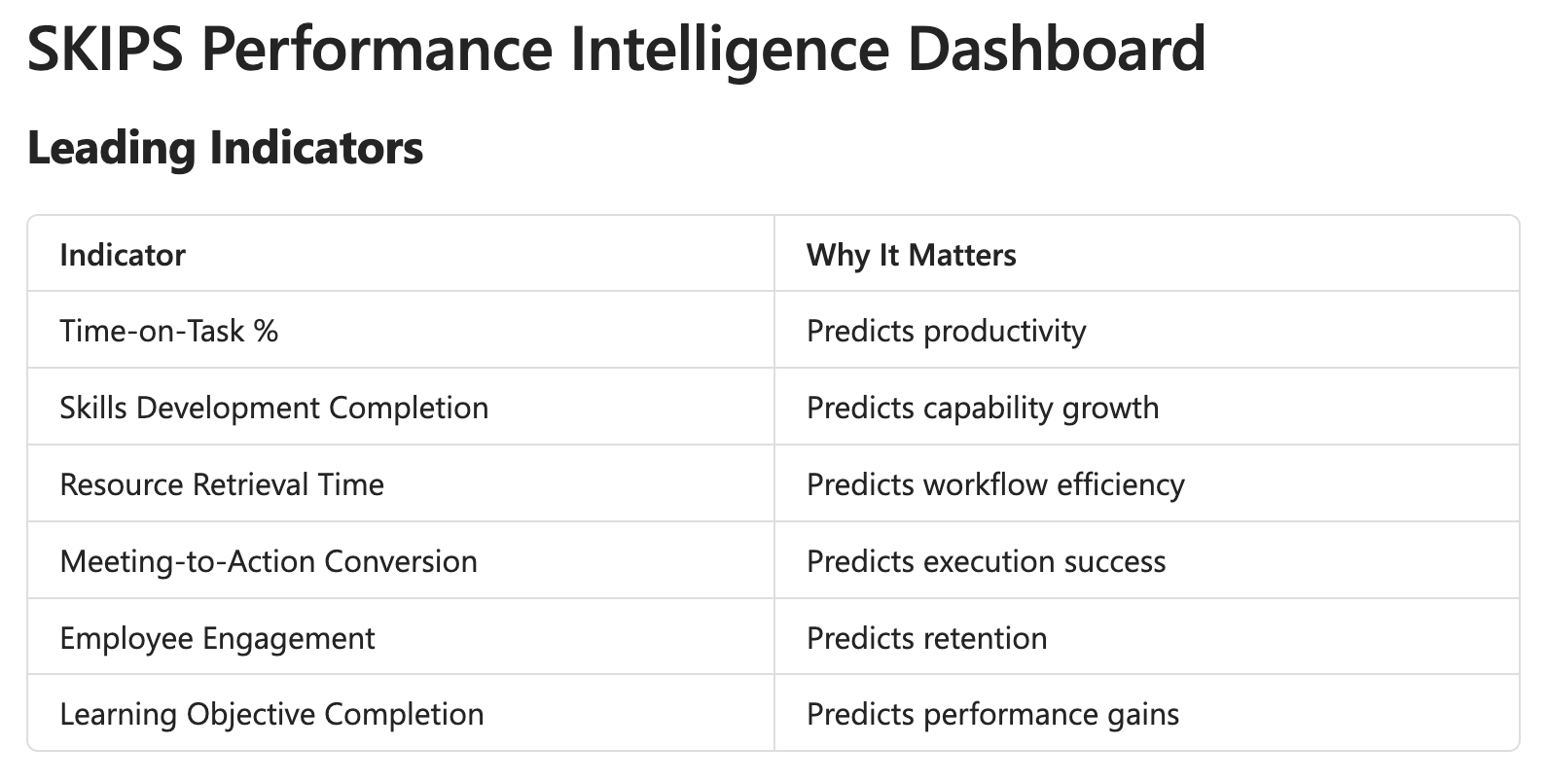
In a business environment, SKIPS can function as a performance optimization framework by reducing lost time, increasing workflow efficiency, and improving task execution. Three critical operational variables include time-on-task, material retrieval, and transitions between activities.
Time-on-Task:
SKIPS helps employees clearly identify performance expectations, learning objectives, and workflow steps before beginning a task. By reducing ambiguity and providing structured guidance, employees spend more time engaged in productive work and less time determining what to do next. Increased time-on-task can lead to higher productivity, faster completion rates, and improved quality outcomes.
Material Retrieval:
When resources, documents, standard operating procedures, and performance supports are systematically organized within the SKIPS ecosystem, employees can quickly access the information needed to perform their work. Reduced search time minimizes disruptions, lowers cognitive load, and allows greater focus on high-value activities.
Transitions:
Transitions between meetings, projects, departments, or phases of work often create productivity losses. SKIPS supports smoother transitions by providing clear action plans, task analysis, performance checkpoints, and workflow visibility. Employees move more efficiently from planning to execution, reducing downtime and maintaining momentum.
Business Impact
By improving time-on-task, accelerating material retrieval, and streamlining transitions, SKIPS can contribute to:
- Increased operational efficiency
- Reduced workflow interruptions
- Faster project completion
- Improved employee productivity
- Greater accountability and execution
- Enhanced organizational learning
- Stronger performance outcomes
SKIPS transforms work processes from fragmented activities into coordinated performance systems where energy is directed toward execution rather than lost through inefficiency, delays, or uncertainty.
#SKIPSFramework#PerformanceIntelligence#LearningAnalytics#WorkforceDevelopment#OperationalExcellence#BusinessIntelligence#EmployeePerformance#Productivity#DataDrivenLeadership#WorkforceAnalytics#ContinuousImprovement

Leave a Reply